
What Is SOLAS? The Shipping Safety Law Explained
Why can a ship built in South Korea, owned in Greece and registered in Panama dock in Brazil and still follow the same safety rules as every other ship there? What is SOLAS? It is the International Convention for the Safety of Life at Sea, the main global treaty that sets the minimum safety standards for how merchant ships are built, equipped and run. Almost every large ship on the ocean follows it, and port inspectors can hold a ship at the dock if it does not. That single treaty is the reason a seafarer from India, the Philippines or Ukraine finds the same lifeboats, fire alarms and radio systems on every vessel.
What Is SOLAS and What Does the Full Form Mean?
The SOLAS full form is the International Convention for the Safety of Life at Sea. People also call it the SOLAS Convention, SOLAS 1974 or “SOLAS as amended.”
The International Maritime Organization (IMO), a United Nations agency, looks after the treaty. Countries that join the convention, called contracting governments, must make sure ships under their flag follow its rules. More than 160 countries have joined, and together they represent almost all of the world’s merchant shipping by tonnage.
SOLAS covers three big areas: how a ship is designed and built, what equipment a ship must carry, and how the crew and the company must operate the ship.
The convention does not cover pollution. That job belongs to MARPOL, which we explain later in this guide.
Why Was SOLAS Created?
The Titanic disaster created SOLAS. In April 1912, the RMS Titanic hit an iceberg in the North Atlantic and sank with the loss of more than 1,500 lives. The ship had lifeboats for only about half of the people on board. Nearby ships did not hear her distress calls because their radio operators were off duty.
The world reacted fast. A conference in London produced the first SOLAS Convention in 1914. It required enough lifeboats for everyone, regular drills and a radio watch that never stopped.
How Did the SOLAS Convention Develop Over Time?
The 1914 convention never took effect because World War I began. Countries wrote new versions as technology and shipping changed.
| Year | Version | What happened |
|---|---|---|
| 1914 | First SOLAS | Adopted after the Titanic, but never entered into force |
| 1929 | Second SOLAS | Stronger rules for construction and radio |
| 1948 | Third SOLAS | Updated after the war, added radar and dangerous goods rules |
| 1960 | Fourth SOLAS | First one adopted under the IMO |
| 1974 | Fifth SOLAS | Current treaty, in force since 25 May 1980 |
Older versions had one big weakness. Every change needed formal approval from enough countries, and that could take years. Some rules were out of date before they took effect.
SOLAS 1974 fixed this with a method called tacit acceptance. The IMO adopts an amendment and sets a date. The amendment enters into force on that date unless enough countries object. Because of this, SOLAS gets updated almost every year.
Which Ships Must Follow SOLAS?
SOLAS applies mainly to ships on international voyages. The scope depends on ship type and size:
Passenger ships that carry more than 12 passengers
Cargo ships of 500 gross tonnage and above (some rules start at 300 gross tonnage)
Tankers, bulk carriers and container ships within those size limits
Several vessels are outside most SOLAS rules. These include warships, fishing vessels, ships without mechanical power and private yachts that do no trade. Chapter V on navigation is wider, because it applies to almost all vessels at sea, including small boats and yachts.
Every ship that falls under SOLAS must carry valid safety certificates. The flag state issues them after surveys. Cargo ship certificates usually last up to five years, with checks in between. Passenger ship certificates are renewed every year.
What Are the SOLAS Chapters?
SOLAS has 14 chapters. Chapters II and XI each split into two parts, so you will see 16 headings when you read the table of contents.
| Chapter | Subject |
|---|---|
| I | General provisions, surveys and certificates |
| II-1 | Construction, stability, machinery and electrical systems |
| II-2 | Fire protection, detection and extinction |
| III | Life saving appliances and arrangements |
| IV | Radiocommunications (GMDSS) |
| V | Safety of navigation |
| VI | Carriage of cargoes and oil fuels |
| VII | Carriage of dangerous goods |
| VIII | Nuclear ships |
| IX | Safety management (ISM Code) |
| X | High speed craft |
| XI-1 | Special measures to enhance maritime safety |
| XI-2 | Special measures to enhance maritime security (ISPS Code) |
| XII | Additional safety measures for bulk carriers |
| XIII | Verification of compliance |
| XIV | Safety measures for ships in polar waters |
What Are the Main SOLAS Requirements?
The chapters hold hundreds of rules, but a handful of them shape daily life on board.
Ship construction and stability (Chapter II-1). A ship must stay afloat after damage, so the hull is split into watertight compartments with bulkheads. The chapter also covers double bottoms, pumping systems, steering gear, and main and emergency power. Part G covers ships that burn low flashpoint fuels such as LNG or methanol and links to the IGF Code.
Fire safety (Chapter II-2). Fire resistant bulkheads and decks that split the ship into zones, smoke and heat detectors with alarms, fixed extinguishing systems in engine rooms and cargo spaces, fire pumps, hoses and portable extinguishers, marked escape routes. The detailed technical rules sit in the Fire Safety Systems (FSS) Code.
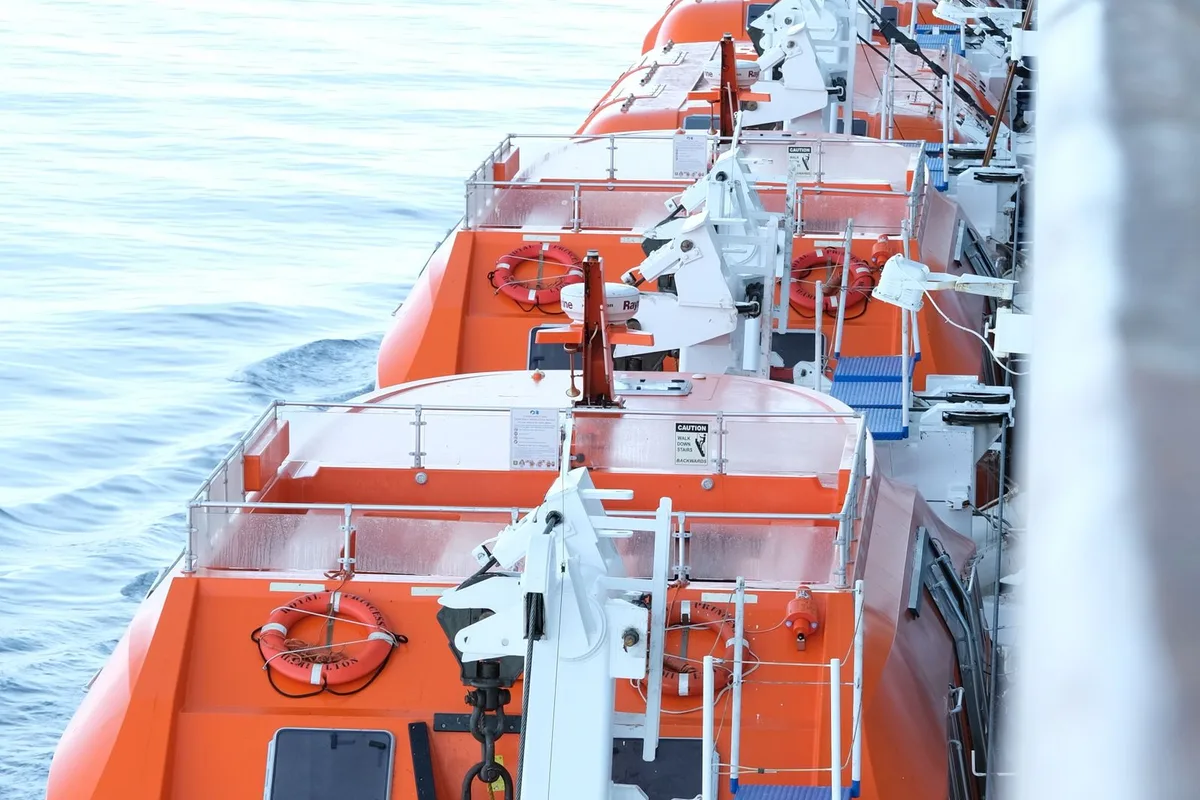
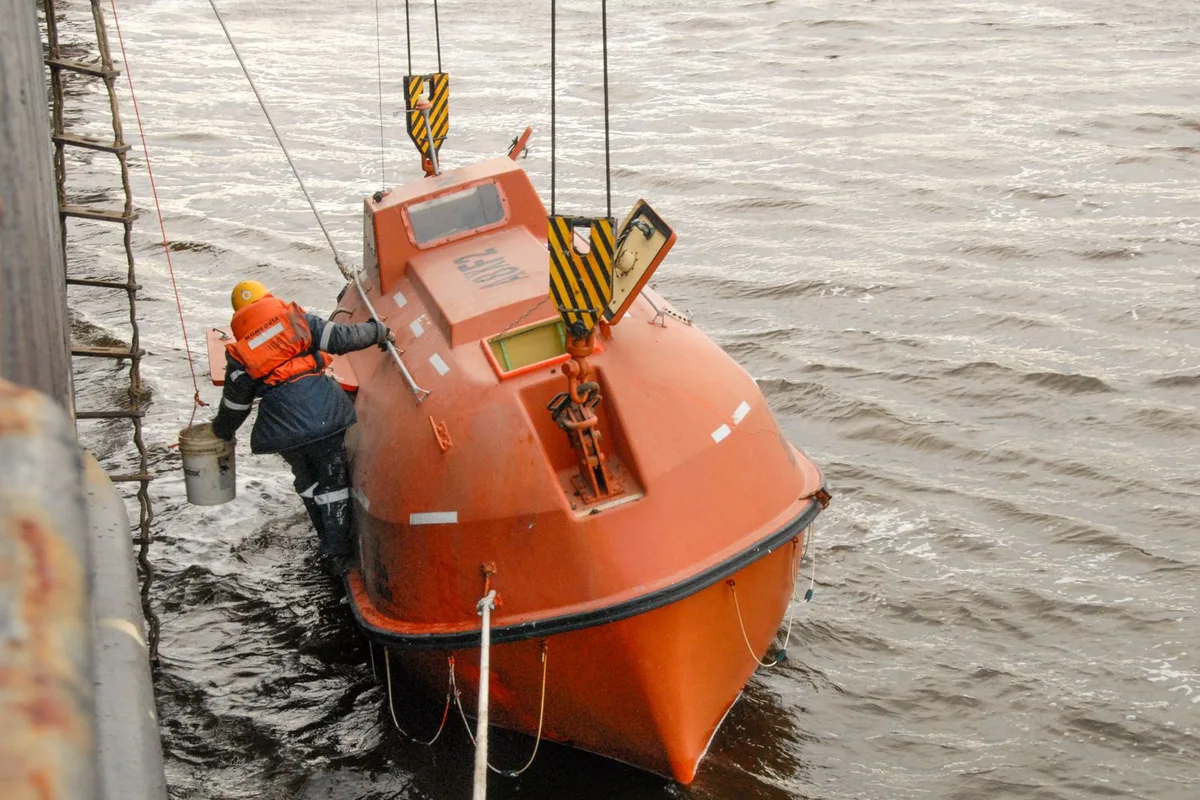
Life saving appliances (Chapter III). Passenger ships must carry survival craft for 125 percent of the people on board. Cargo ships must have enough lifeboats and liferafts for the whole crew, with capacity available on both sides of the ship. Also lifejackets for every person, immersion suits, lifebuoys with lights and smoke signals, rescue boats, and marine evacuation systems on some passenger ships. The details come from the LSA Code. On a cargo ship, every crew member must take part in at least one abandon ship drill and one fire drill each month.
GMDSS (Chapter IV). Ships on international voyages must carry equipment that lets them send and receive distress alerts automatically: DSC radios, EPIRB, SART, NAVTEX. GMDSS divides the ocean into four sea areas, A1 to A4. It became fully mandatory for SOLAS ships on 1 February 1999.
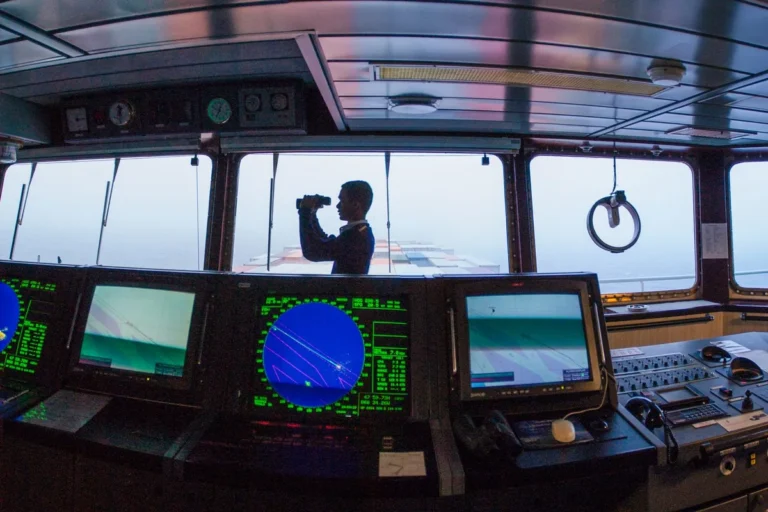
Navigation (Chapter V). Radar, gyrocompass, ECDIS, Voyage Data Recorder and AIS are required. AIS must be fitted on all ships of 300 gross tonnage and above on international voyages, cargo ships of 500 gross tonnage and above on domestic voyages, and all passenger ships. Voyage planning is mandatory and a master must help anyone in distress at sea.
ISM Code (Chapter IX). Every shipping company and ship must run a written Safety Management System, with a Designated Person Ashore, a Document of Compliance for the company and a Safety Management Certificate for each ship.
ISPS Code (Chapter XI-2). Security plans, trained security officers and three security levels. Mandatory since 1 July 2004. Full breakdown in our guide to the ISPS Code.
Other key rules: container Verified Gross Mass (VGM) since 1 July 2016; Chapter XII bulk carrier rules; Polar Code mandatory via Chapter XIV since 1 January 2017; permanent IMO ship number and Continuous Synopsis Record under Chapter XI-1.
What Is SOLAS in Practice for a Seafarer?
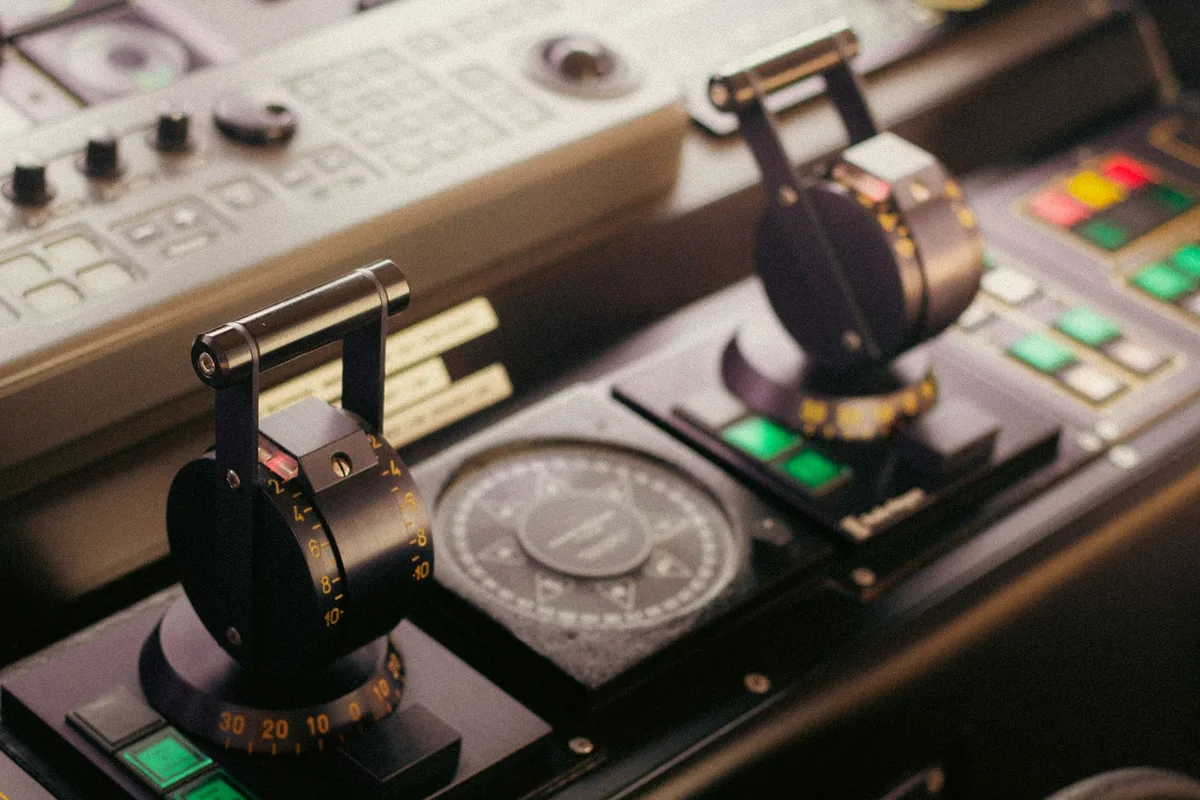
It is the reason you hold monthly drills, check lifejackets, test alarms and keep logbooks. The chief officer tests lifeboat engines and davits, the engineers test the emergency generator and fire pumps, the second officer keeps charts and warnings up to date, and the master signs off on drills. If you are planning a sea career, MarineOar has jobs, guides and news to help you prepare.
Who Enforces the SOLAS Convention?
Flag states survey ships, issue certificates and investigate accidents, often through classification societies. Port State Control officers can board foreign ships, check certificates, equipment and crew, and detain a ship with serious problems. Regional agreements such as the Paris and Tokyo memoranda share inspection data. The IMO audit scheme (Chapter XIII, in force since 1 January 2016) audits countries themselves.
How Are SOLAS Amendments Made, and What Changed in 2026?
The IMO Maritime Safety Committee adopts amendments, which enter into force on a fixed date under tacit acceptance. A large package took effect on 1 January 2026:
Mandatory reporting of containers lost at sea (new SOLAS and MARPOL rules).
Fuel flashpoint rules under Chapter II-2 to stop ships receiving oil fuel that does not meet the 60 degree Celsius flashpoint requirement.
Electronic inclinometer required on container ships and bulk carriers of 3,000 gross tonnage and above built on or after 1 January 2026 (Regulation V/19).
Tougher fire detection and protection rules for vehicle and ro-ro spaces.
Polar rules extended to more vessel types.
IMDG Code Amendment 42-24 became mandatory on the same date.
How Is SOLAS Different From MARPOL and STCW?
SOLAS protects lives and the ship. MARPOL protects the sea from pollution by oil, chemicals, sewage, garbage and air emissions MARPOL Annexes. STCW sets training and certification rules for seafarers.
What Happens If a Ship Breaks SOLAS Rules?
Minor faults get a deficiency note with a fix deadline. Serious faults, such as broken fire pumps or missing lifeboats, can lead to detention until an inspector agrees the ship is fixed. A master or officer who falsifies records or ignores safety duties can lose a licence or face criminal charges under flag state law.
FAQ
What is SOLAS in simple words? SOLAS is the main international treaty on ship safety. It sets minimum rules for how ships are built, equipped and operated so that crew and passengers can survive an emergency at sea.
What is the SOLAS full form? The International Convention for the Safety of Life at Sea. The current version dates from 1974 and entered into force on 25 May 1980.
How many chapters are in SOLAS? SOLAS has 14 chapters. Chapters II and XI each have two parts, which gives 16 headings in total.
Is SOLAS mandatory for all ships? No, but it is mandatory for most commercial ships on international voyages, including passenger ships and cargo ships of 500 gross tonnage and above. Warships, fishing vessels and private yachts are mostly outside it.
One Comment
Comments are closed.