
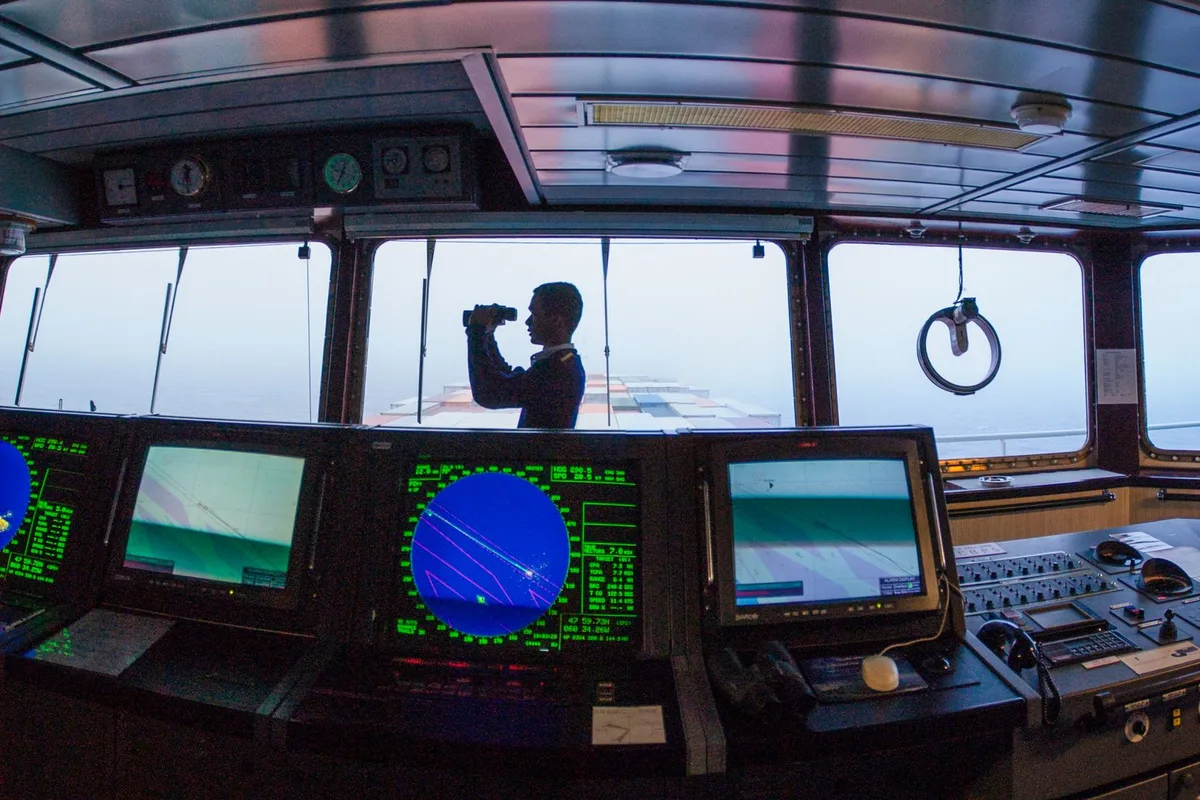
Merchant Navy Qualifications: The Complete Guide to Joining
What is the real merchant navy qualification you need to work on a ship from India? For officer jobs, it is a Class 12 pass with Physics, Chemistry and Mathematics (PCM) at 60 percent, at least 50 percent in English, a DG Shipping approved medical, and a seat in an approved pre sea course. For crew jobs, a Class 10 pass with 40 percent marks is enough to start the GP Rating course. That is the short answer, but the details decide who gets a ship and who gets stuck at the gate, so read on.
The merchant navy is a civilian fleet of cargo ships, tankers, container ships and passenger vessels. It is not part of the armed forces and it is not a government job. You work for a private shipping company, while the Directorate General of Shipping (DG Shipping) sets the training and certification rules in India. Ships carry the large majority of world trade by volume, so the demand for trained crew is steady.
Merchant Navy Qualification at a Glance
Your starting point depends on the stage you are at now. This table gives the basic picture for India.
| Your stage | Entry route | Main requirement | Where you end up |
|---|---|---|---|
| After Class 10 | GP Rating (6 months) | 40% aggregate with English, Maths and Science, 40% in English | Deck or engine rating (crew) |
| After Class 12 PCM | DNS, B.Sc. Nautical Science, B.Tech Marine Engineering | 60% in PCM, 50% in English, valid IMU CET rank for IMU courses | Deck officer or engineer |
| After graduation | GME or ETO course | Mechanical or electrical engineering degree | Engine officer or Electro Technical Officer |
Figures like these come from DG Shipping norms and institute notices. Each institute publishes its own notification every year, so always check it before you pay any fee.
Who Can Join the Merchant Navy? Core Eligibility
Five basics apply almost everywhere.
Education. The level depends on the course, as shown above. For officer courses, PCM in Class 12 is the standard rule.
Age. Most pre sea courses want you between 17 and 25 years. The GP Rating course sets the lower limit at 17.5 years.
Marital status. Many pre sea courses, including IMU courses, require candidates to be unmarried at admission. This catches people by surprise, so read the notification.
Passport. You need a valid passport before sea service starts, and institutes often ask for it early.
Medical fitness. You must pass a medical test by a DG Shipping approved doctor. More on this below.
Merchant Navy Qualification After 10th
Can you join the merchant navy after Class 10? Yes, as a rating, which means crew rather than officer. The route is the GP Rating (General Purpose Rating) course, a six month residential program approved by DG Shipping.
The usual eligibility is a Class 10 pass with at least 40 percent aggregate, with English, Maths and Science as subjects, and at least 40 percent in English. A Class 12 pass in any stream at 40 percent, or a two year ITI in trades like fitter, machinist or welder, can also qualify, as long as the English rule is met. The age range is 17.5 to 25 years on the day the course starts. DG Shipping allows extra years for some groups: five years for SC and ST candidates, three years for non creamy layer OBC candidates, and two more years for women in each category. Always confirm the exact relaxation with your institute.
Be honest with yourself about the ceiling here. A GP Rating can later move toward officer level, but it needs extra sea service, more exams and stronger English marks, so it is a longer road than starting as a cadet.
Merchant Navy Qualification After 12th

This is the main road to becoming an officer. You need Class 12 with PCM at 60 percent aggregate and 50 percent in English (Class 10 or 12 marks, depending on the institute). If you want a full step by step plan, read our guide on how to join the merchant navy after 12th.
Three courses lead to officer roles:
| Course | Duration | Leads to |
|---|---|---|
| Diploma in Nautical Science (DNS) | 1 year | Deck officer (degree follows after sea time) |
| B.Sc. Nautical Science | 3 years | Deck officer |
| B.Tech Marine Engineering | 4 years | Engine officer |
Deck officers run the navigation and cargo side of the ship. Engineers keep engines, generators and machinery working. Pick the side that fits your interest, because switching later is hard.
Merchant Navy Qualification After Graduation
Already finished a degree? You still have two doors.
Mechanical engineering graduates can take the Graduate Marine Engineering (GME) course, which is about one year and leads to engine officer roles. Electrical or electronics engineering graduates can take the Electro Technical Officer (ETO) course, which is a few months long at many institutes. Institutes set their own age and marks rules for graduates, and the age cap is usually a bit higher than for school leavers, so check each notification.
IMU CET: The Entrance Exam Most Officers Clear

IMU CET is the Indian Maritime University Common Entrance Test. It is a computer based exam used for admission to B.Tech Marine Engineering, B.Sc. Nautical Science, DNS and several postgraduate programs at IMU campuses and affiliated institutes. The 2026 exam was held on 24 May 2026, with the age cut off calculated as of 1 August 2026.
For B.Tech Marine Engineering, the published rule for the 2026 cycle was a maximum age of 25 years for general category male candidates, with relaxation for reserved categories and different limits for women as listed in the official notification. The paper tests Physics, Chemistry, Maths and English. Dates and rules change each year, so read the current notification on the Indian Maritime University website before applying. For a full breakdown of the paper and how to prepare, see our IMUCET explainer in the Read More list below.
Merchant Navy Sponsorship: What It Means
Sponsorship is a job promise from a shipping company before or during your pre sea course. The company tests you with a written exam and an interview. If you pass, it sponsors your training and guarantees onboard placement with the company after the course.
This matters because the biggest hurdle for many cadets is not the classroom. It is finding a ship for the mandatory onboard training. The DNS course is generally offered to sponsored candidates only, according to institute practice. Sponsored seats are limited and competitive, and the company, fee structure and bond terms differ, so read the offer letter closely and ask what happens if you leave early.
Merchant Navy Age Limit
For most pre sea courses, the window is 17 to 25 years. The GP Rating course starts at 17.5. Reserved categories and women get relaxation, and graduates in GME or ETO courses usually get a higher cap. The age is usually counted on a fixed date, such as 1 August of the admission year for IMU CET, so a birthday after that date will not help you. Our detailed article on the merchant navy age limit covers each course one by one.
Merchant Navy Eyesight Requirements and Medical Rules
You cannot sail without a medical certificate, no matter how high your marks are. A DG Shipping approved doctor examines your vision, colour vision, hearing, general health and fitness for sea service.
Many institutes quote 6/6 eyesight with no colour blindness for deck and rating roles, while some allow limited spectacle power. The exact limit differs by department and by the version of the DG Shipping medical rules in force, so do not rely on a blog alone. Colour blindness is a common reason candidates are rejected for deck roles, so get your colour vision tested before you invest in any course. Serious conditions that affect safety at sea, such as uncontrolled diabetes or epilepsy, can also lead to rejection.
Documents Every Indian Seafarer Needs: Passport, INDoS and CDC
After training you need papers to sign on a ship. The key ones are a passport, an INDoS number (Indian National Database of Seafarers), and a CDC.
What is the CDC full form? CDC stands for Continuous Discharge Certificate. DG Shipping issues it to Indian seafarers as their official identity and sea service record. Your seaman’s book entries show every ship you join and leave. Without a valid CDC, you cannot join a vessel as an Indian seafarer.
Training After Admission: STCW and Certificates of Competency
Getting in is only step one. To work on ships worldwide, you must also complete training under the STCW Convention (Standards of Training, Certification and Watchkeeping), which the International Maritime Organization (IMO) maintains. Basic safety training covers personal survival, fire fighting, first aid and personal safety and social responsibility.
For officers, the next stage is the Certificate of Competency (CoC). Deck officers sit the Second Mate exam after enough sea service, and engineers sit the Class 4 exam. You then sit higher exams as you climb: chief officer, then master (captain) on the deck side, and second engineer, then chief engineer on the engine side. Sea time requirements and exam rules are set by DG Shipping, and the time to reach captain or chief engineer commonly runs into many years.
Merchant Navy Salary: What to Expect
Pay depends on rank, company, ship type, contract length and flag. Cadets earn a stipend, officers earn much more, and senior ranks earn the most. No single number is true for everyone, and blog tables often mix up figures. Our guide to merchant navy salary explains how pay changes with rank. Always check actual offers from your company or a licensed agent.
The Philippines Route in Short
Filipino readers follow a different path. The main officer degrees are the Bachelor of Science in Marine Transportation (BSMT) for deck and the Bachelor of Science in Marine Engineering (BSMarE) for engine, taken at approved maritime schools under MARINA, the Maritime Industry Authority. Filipino seafarers also need a Seafarer’s Identification and Record Book (SIRB) and STCW certificates from MARINA before manning agencies can deploy them. MARINA rules allow a training SIRB for cadets from age 16, and an employment SIRB from age 18. Check current MARINA circulars for exact documents. You can find more maritime career guides on MarineOar.
Common Mistakes That Cost Candidates a Year
Paying a fee to an agent who promises a guaranteed job. Seafarers should not pay to get hired, and recruitment agencies should hold a valid DG Shipping RPSL license, which you can verify.
Joining an institute that is not approved by DG Shipping, because the certificate may not count.
Skipping the medical until after paying fees.
Missing the age cut off date by a few days.
Ignoring the unmarried rule at admission.
FAQ
What is the minimum merchant navy qualification in India? The minimum is a Class 10 pass with 40 percent aggregate, with 40 percent in English, for the six month GP Rating course. Officer courses need Class 12 with PCM at 60 percent and 50 percent in English.
Can I join the merchant navy after 12th without PCM? For officer courses like DNS, B.Sc. Nautical Science and B.Tech Marine Engineering, PCM is required. Students from other streams can still join as a GP Rating if they meet the 40 percent and English rules.
Is the merchant navy a government job? No. You work for a private shipping company. DG Shipping regulates training and certificates, but it is not your employer.
What is the age limit for the merchant navy? Most pre sea courses accept candidates between 17 and 25 years, with relaxation for some categories. The GP Rating starts at 17.5 years. Always check the age cut off date in your institute’s notification.
Final Word
The right merchant navy qualification is a mix of marks, age, medical fitness, an approved course and, ideally, a sponsor. Check each rule against the official notification, verify every institute and agent with DG Shipping, and plan your medical early. Do that, and the path to a ship is clear.

One Comment
Comments are closed.